
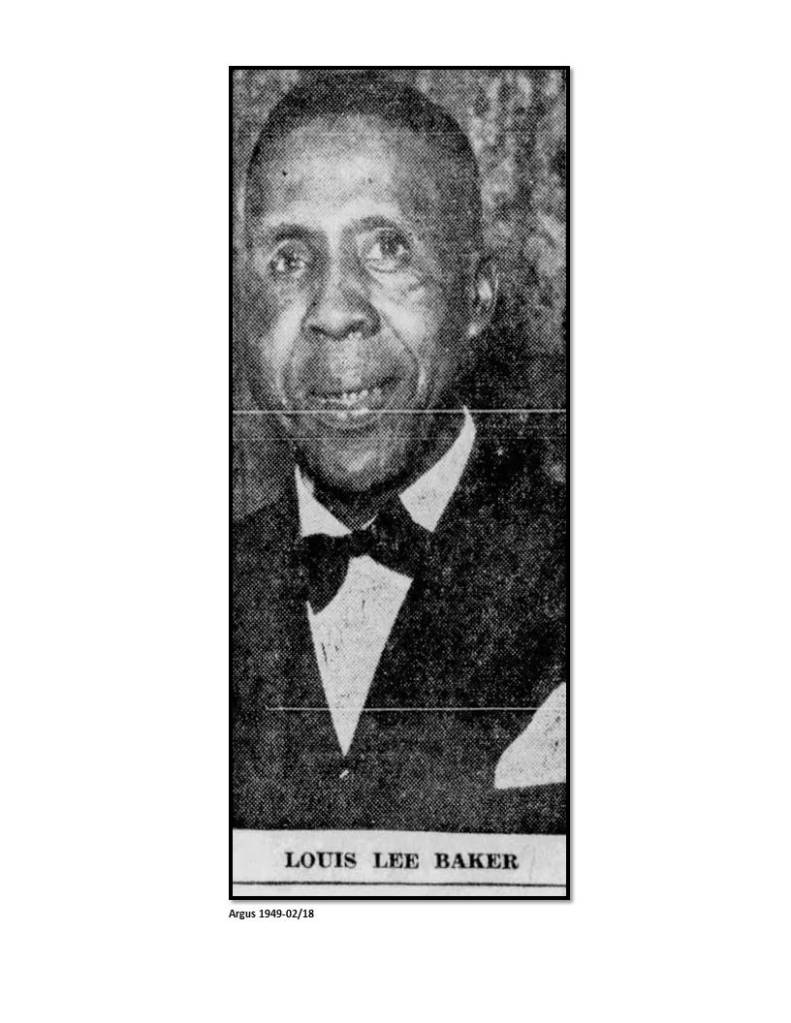
Louis Lee Baker: St. Louis Hero
(c. 1891 to 1949)
Lee Baker is a name that all St. Louisans should know, but sadly do not.
In the Fall of 1938, gangsters posing as police kidnapped Mr. Baker from SLMPD witness protection to prevent him from testifying in court. They drove him out to Creve Coeur Lake in West County, where they shot him twice and left him for dead. He miraculously survived, eventually helping law enforcement secure convictions against two of St. Louis’ most vicious gangsters, Isadore Londe and Elmer “Dutch” Dowling. For his incredible service to the city, Mr. Baker was declared a hero by Mayor Bernard Dickmann, the Downtown Lion’s Club, and the Urban League, among many others.
Unfortunately, the segregated city that lifted him up in the 1930’s did everything it could to tear him back down in the 1940’s. Black, disgraced, and disabled, he spent the final ten years of his life fighting City Hall to make good on its meager promises to him. History has largely relegated Louis Lee Baker to a plot device in the story arc of gangsters – if not forgotten his story entirely.
Instead, Mr. Baker should be remembered as his own main character in a story of bravery, injustice, and resilience.
Star Witness
His story begins as a 45-year-old laborer walking to work along North Jefferson Avenue around 5:30 A.M., as he did most days. By all accounts, he was a kind and hardworking man from rural Mississippi, separated from his wife, co-parenting a 17-year-old boy. He was contemplating moving back home to Vicksburg to help care for his aging mother after his son finished high school, but the universe had other plans.
As he reached Jefferson and Franklin (now called MLK), Lee observed a dark-colored sedan pull up in front of the Howard’s Dry Cleaners on the northwest corner. He watched intently as the passenger tossed a package upon the front stoop before tearing off into the night. Moments later an explosion ripped through the 2600 block of Jefferson; an all-too-familiar scene in a city over-run by gangsters.
Mr. Baker was able to provide responding officers with a description of the suspect and a license plate number, which led them to the dangerous ex-con Isadore Londe. For the safety of the witness, SLMPD made arrangements for him to be placed on a Cotton Farm near Sikeston, MO, about three hours south of St. Louis.
On the afternoon of Friday, November 18, 1938, two white police officers arrived to retrieve him for court as planned. They knew the secret password, and certainly looked the part of hardened detectives. Everything felt OK for Mr. Baker until they reached the outskirts of St. Louis. The driver insisted on making a quick detour out to Creve Coeur Lake, deep in the County, after sundown – something which people of color simply did not do back then.
Around 8:00 PM, the driver pulled up to an old farmstead off Creve Coeur Mill Road that was clearly abandoned. Terrified, Lee exited the vehicle with the intent to bolt into the icy darkness of the surrounding woods, but the policemen locked arms with him and forced him into the dark building. A few steps inside, Lee is struck upon the back of the head and laid out flat into a pre-dug grave between the floor joists. He learns it was a gunshot when one of the men then crouches down to shoot him a second time through the neck. But, for reasons known only to God and the would-be assassins, they decided to stop there and leave him for dead.
Miraculously, Lee Baker is able to climb out and escape into the unfamiliar countryside. Holding a rag against the side of his face to staunch the bleeding, he stumbled 4-1/2 miles through the mostly-uninhabited bottoms of the Missouri River to the Water Treatment Plant at Howard Bend for assistance. The St. Louis County Sheriff estimated that he wandered, in total darkness and near-freezing temperatures, for about six hours after his attempted murder.
Three weeks later, Louis Lee Baker bravely walked into court, covered in bandages, to raise a gnarled finger in the direction of Isadore Londe, sending him to the Missouri State Penitentiary for the next 17 years. The victim also worked with the FBI and St. Louis County Prosecutors to put away one of his kidnappers, Elmer “Dutch” Dowling, a close associate of Buster Wortman.
Local Celebrity
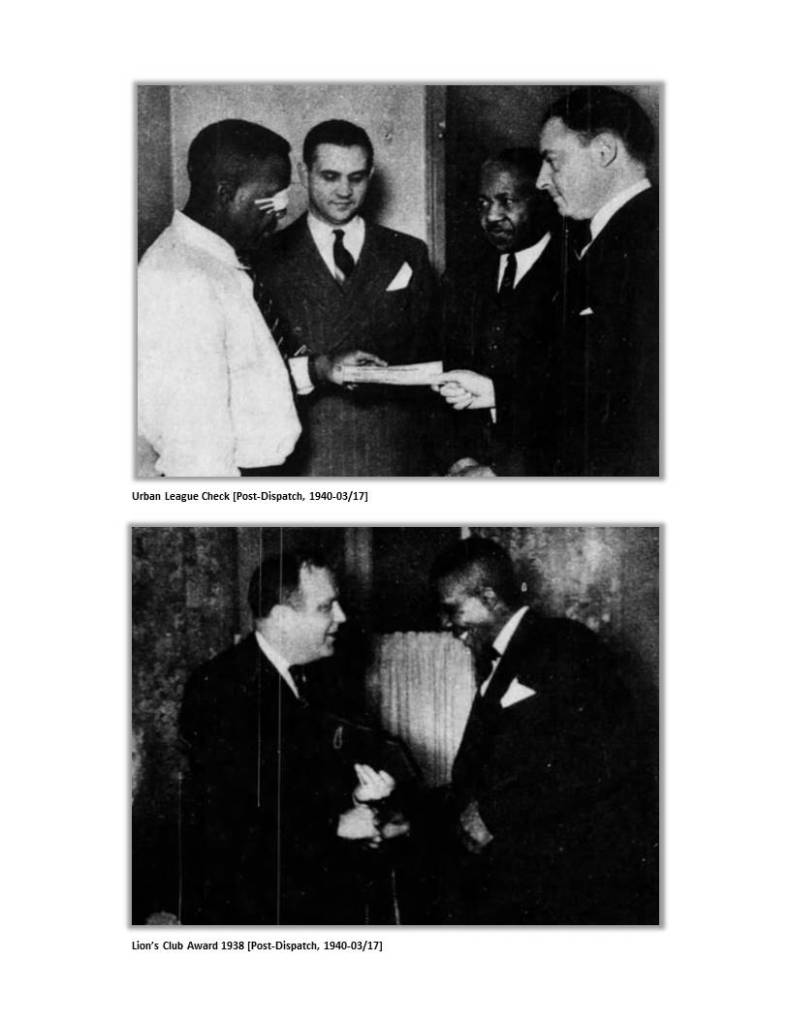
All of St. Louis was astounded by Louis Lee Baker’s incredible story of survival and public service. The Downtown Lion’s Club honored Mr. Baker with their Meritorious Service Award in 1938. Mayor Bernard Dickmann further rewarded him with a lifetime job on the city’s payroll at $100/month. And the Urban League collected $2,367 in donations from a grateful community.
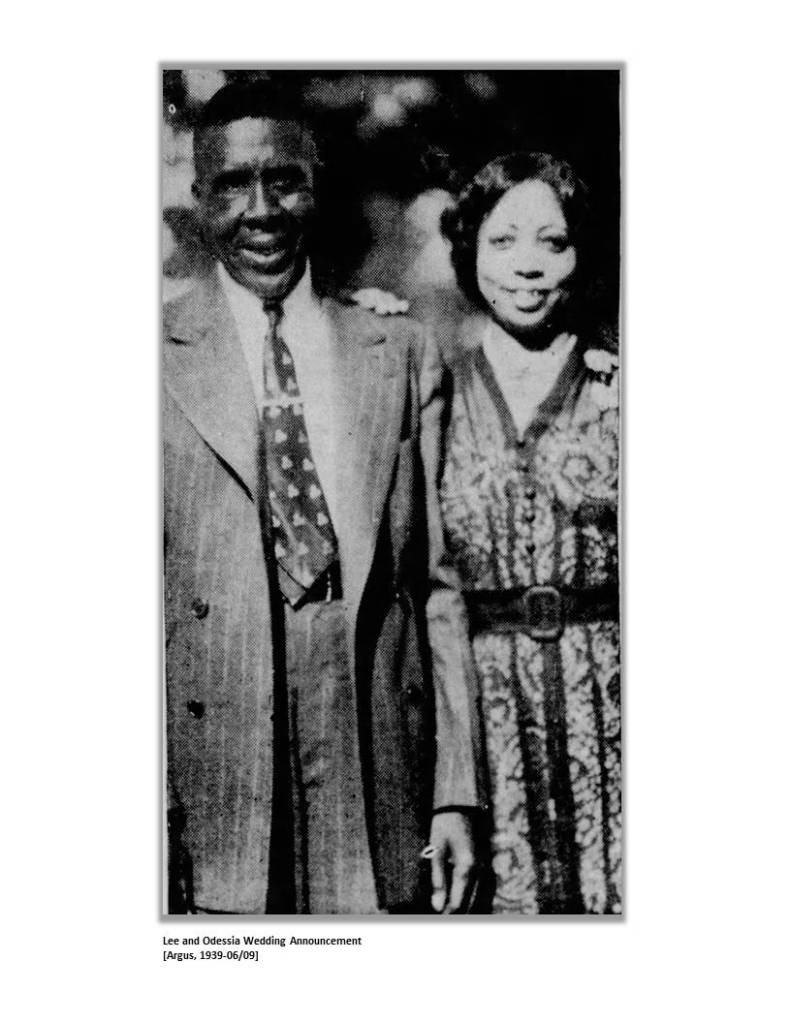
During his recovery at Homer G. Phillips Hospital, Mr. Baker also fell in love with a beautiful and popular waitress across the street at the Grand Terrace Tavern. In the summer of 1939, the couple decided to get hitched at City Hall and start a new home together at 2809 Spruce Street in the heart of Mill Creek. They used the proceeds from the Urban League to purchase a new car and take a proper honeymoon; two luxuries many could not afford in the Great Depression.
He was not getting rich by any means; his $1,200 salary from the city was still about $800 shy of the average household income in 1938. But it was about double his previous pay, and everything a God-fearing man from the Delta needed to be happy.
Reversal
Unfortunately, Baker did not have the tools or opportunity to narrate his own story. His new, white friends unfairly discounted him as the “uneducated negro” who unwittingly foiled clever gangsters in a comedy of errors. Plus, being a public figure made it much harder to deal with the physical and emotional scars of his trauma. He takes his frustrations out on his family and friends, driving people away and destroying his public image in the newspapers.
But it was the meager lifetime position with the city that would really drag him into the bitter racial and political fray of a segregated city.
Over the next 10 years, he is terminated and re-instated three times for poor performance. After being let go from a maintenance man position at Homer G. Phillips Hospital in 1939, he gets bounced between several City departments. At Forest Park, they cut his pay to $63/month. As a watchman at Turner Playground, supervisors shut off the heat to the picnic shelter to which he is assigned, then reprimand him for leaving his post on cold days. After he is dismissed by the city for the final time in 1948, reporters at the Argus implore the community to give him a job and save him from becoming un-housed. When he is finally re-instated by the Civil Service Commission a full year later, City Comptroller Nolte refuses $198 back-pay as ordered by the commission.
In his final months, Lee Baker tries once again to settle into a quiet life of obscurity at the West End Hotel, at the corner of Vandeventer and New Belle. Always cantankerous, he reportedly enjoys being the “policy man” for penny lotteries and dice games between the old men in the building.
On February 17, 1949, a night no different than any other, Lee gets into a tussle with long-time pal Charles E. Franklin over a lottery bet. Franklin insists he bet $0.50, Baker says it was only $0.25. As the old men playfully bicker over a quarter in a fifth-floor hallway, Lee loses his balance and falls through a window, somehow taking his friend along with him. Baker is killed in the five-story fall and Franklin appears to survive somehow, but is permanently disabled.
St. Louis Hero Lee Baker was laid to rest in Vicksburg, MS. He was 56 years old.
 TalesfromtheLou.com