
Pre-WWII gangsters struggle to stay relevant after 1950 as the city resolves to clean up its image.
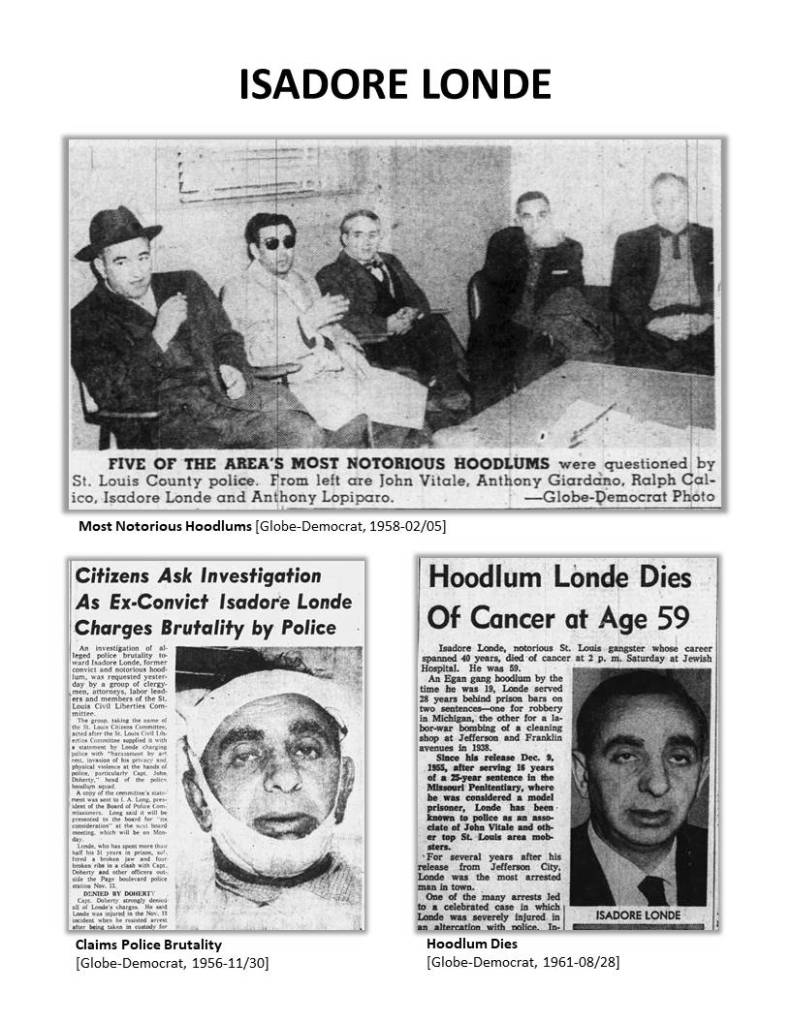
Isadore Londe
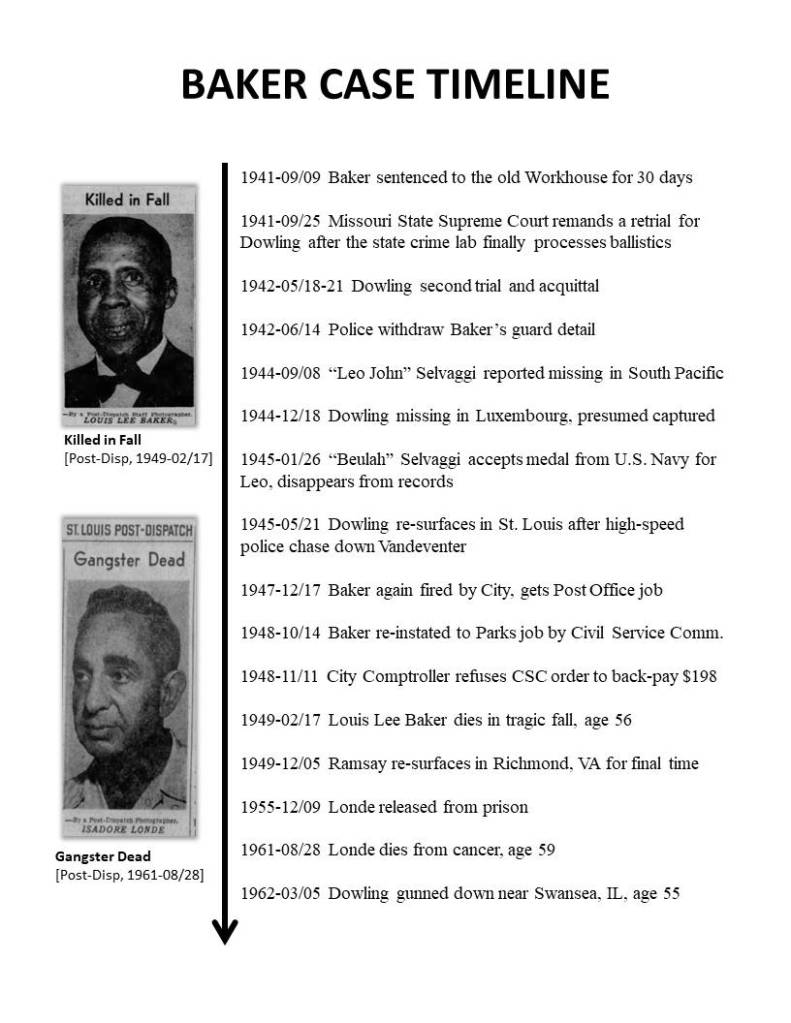
When Londe is released from prison in 1955, he is paraded around town by the who’s who of St. Louis mobsters: Anthony “Tony Lap” Lopiparo, John Vitale, and Anthony Giordano. Many citizens feared that he might be some kind of boss returning to run organized crime. However, those in law enforcement knew it meant the opposite: he was a loose end for the Sicilians who were now in charge.
In order to stay in the public awareness, he organizes a public campaign against the St. Louis Metro Police Department for brutality (upon himself). He circulates a petition allegedly backed by the Civil Liberties Committee, N.A.A.C.P., and all the top religious leaders across the city. It felt very on-brand with his past shenanigans, and the movement never really gets any traction.
Shortly thereafter, Isadore Londe is diagnosed with cancer and dies at Jewish Hospital on August 28, 1961. He was 59 years old.
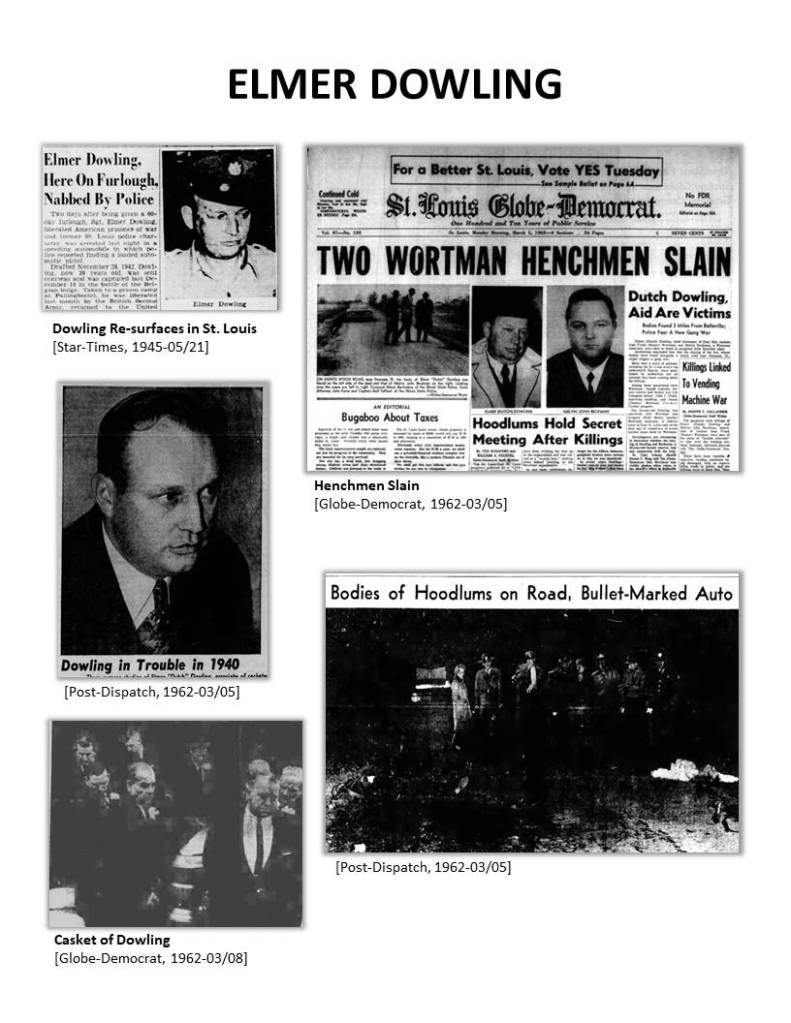
Elmer Dowling
Upon his acquittal in 1942, “Dutch” Dowling is swiftly drafted by the United States Army. In Dec. 1944, less than three months after Merchant Marine L.J. Selvaggi disappears in the South Pacific, Dowling, too, goes missing in Luxembourg, presumed to be captured by the Nazis.
Fast forward six months, Dowling resurfaces in St. Louis when he leads police on a high-speed chase down Vandeventer through Shaw and Tower Grove, blasting past red lights and stop signs, before almost wrecking out at Arsenal. The Cadillac coupe he is driving is registered to Illinois mobster Frank “Buster” Wortman, and there is a loaded 0.38 caliber revolver on the passenger seat. The hulking, belligerent man is so intoxicated it takes half a dozen patrolmen to take him into custody. Police then take him to City Hospital No. 1 on Lafayette where he again tries to fight and must be subdued by several officers.
After his raucous return to St. Louis, he settles back into a life of crime on the East Side for the next 17 years.
On March 5, 1962, Dowling and his associate, Melvin Beckman, are gunned down on a country road outside Swansea, IL. In Dowling’s breast pocket, investigators find a slip of paper listing the names of jurors selected for Wortman’s upcoming trial for tax evasion. St. Louis Catholics expressed outrage when Ss. Peter and Paul Parish in Collinsville agreed to host the all-gangster circus that was his funeral. Dowling was 55 years old.
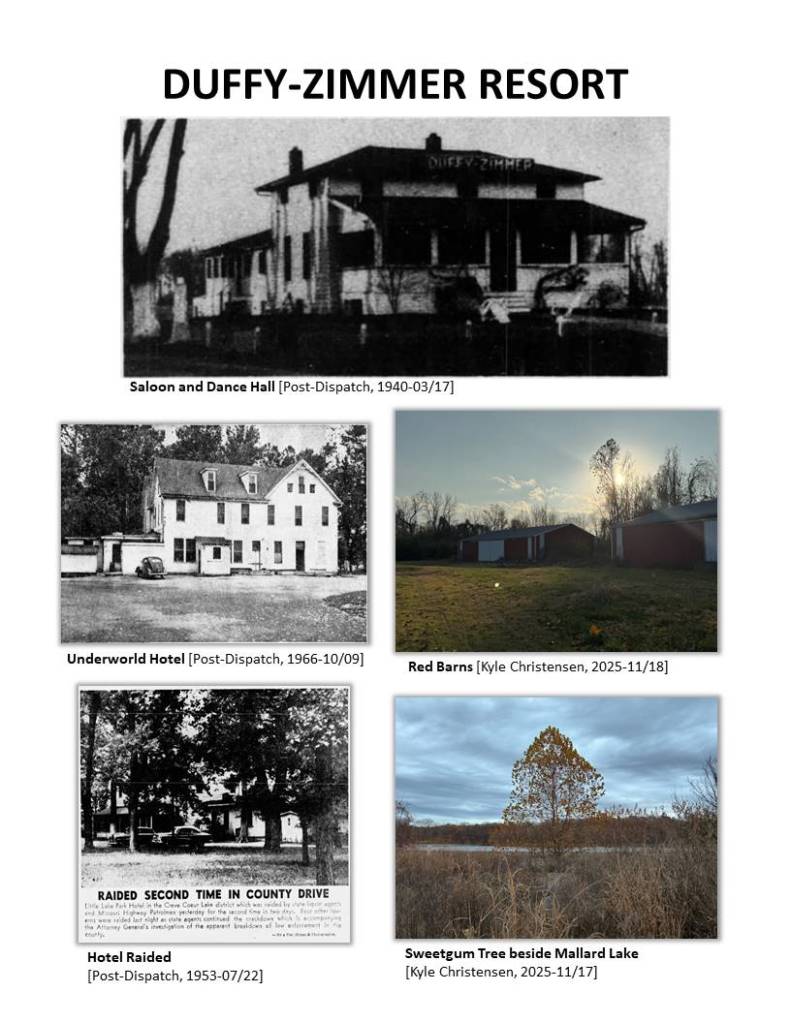
Duffy-Zimmer Resort
The Duff-Quin Tavern, Duffy-Zimmer Resort, and Little Lake Park Hotel on Creve Coeur Mill Road was a well-known gangster hangout from about 1925 to 1955. Dozens of homicides, crimes and schemes were planned, committed and covered up within its fences.
In the mid-1950’s, the property was purchased by the Seeger Family (as in Seeger Toyota). For many years, golfer Zeke Seeger and his wife operated a driving range and pro shop where the saloon and dance hall formerly stood off Creve Coeur Mill Road. After his passing, the land was re-developed into the Lou Fusz Soccer Complex and Highway 141. The only landmarks that remain today are two red barns constructed on the high spot of land where the hotel formerly sat.
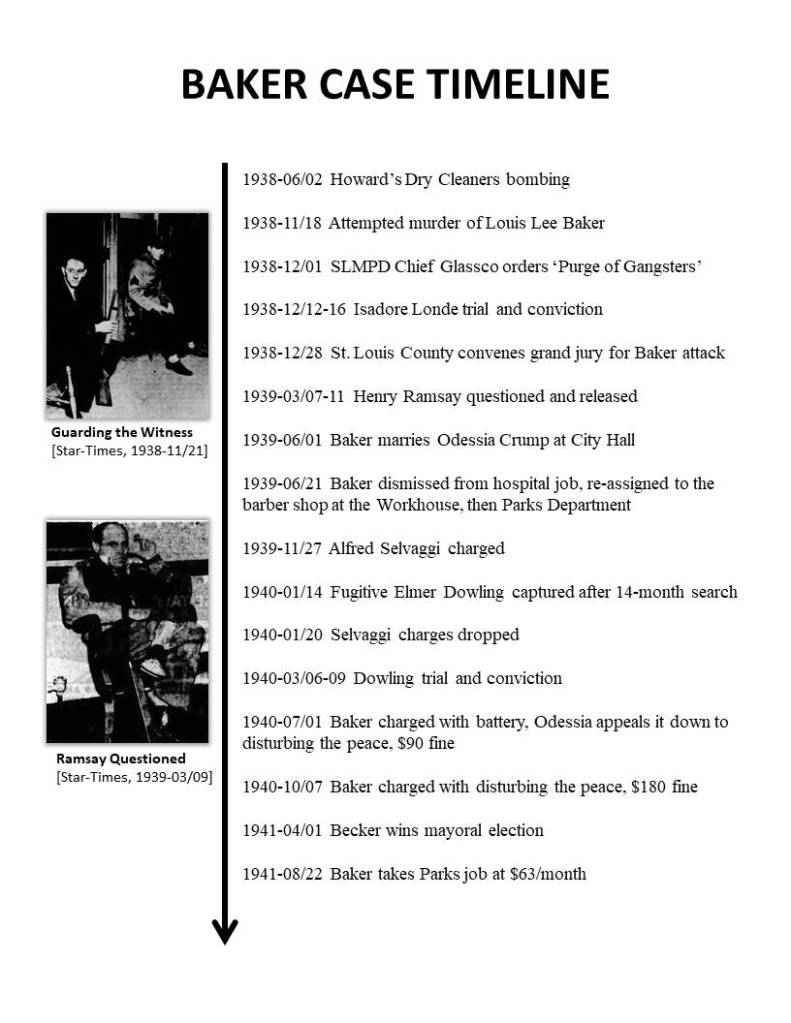
The abandoned Duff-Quin Tavern site where Lee Baker was shot and left for dead now sits below the waters of Mallard Lake. St. Louis County Parks reportedly recovered guns and all sorts of relics during construction. Along the Bootlegger’s Run jogging trail, there is a magnificent Sweetgum tree growing tall and stoic on the bank, fairly close to where the attack occurred. It’s a very hardy tree that’s also kind of a menace when it drops its spikey fruit in the Fall. For this author, it’s a gentle reminder of the un-stoppable man Louis Lee Baker.
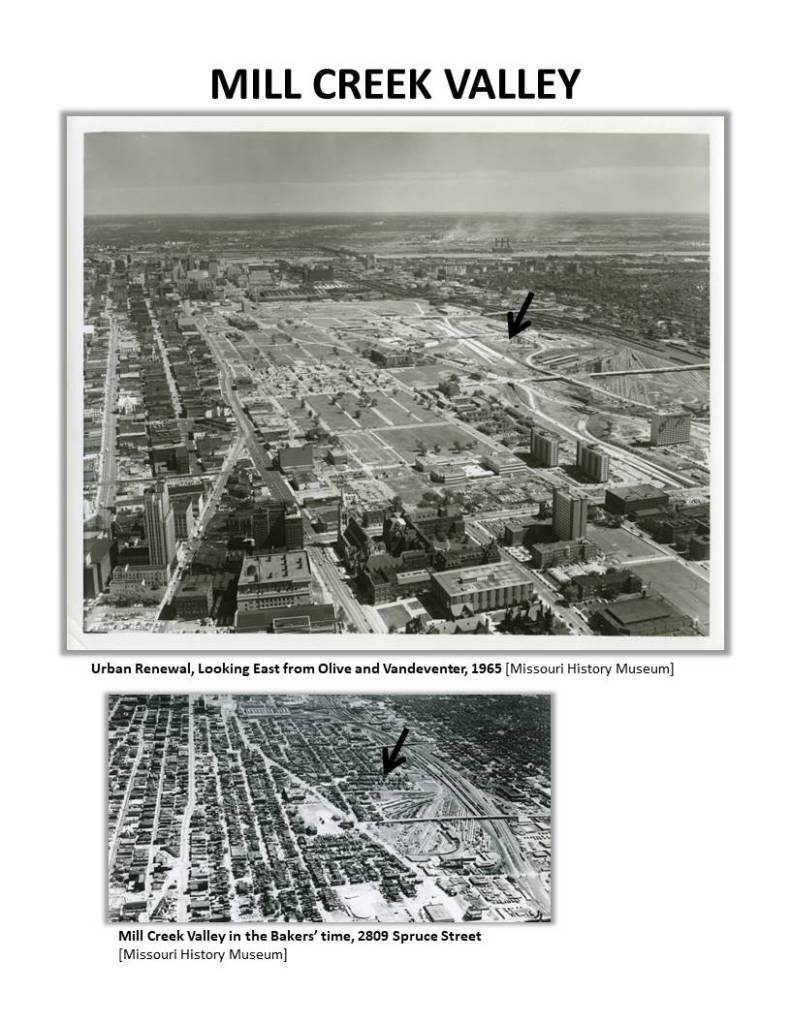
Mill Creek Valley
From 1958 to 1961, the 460-acre Mill Creek neighborhood that Lee and Odessia Baker lived in was erased in the name of urban renewal. An estimated 18-20,000 residents of color were forcefully relocated to other neighborhoods such as the Ville, CWE, and JVL; or, into new state and federal housing projects like Pruitt and Igoe. The couple’s former home at 2809 Spruce Street, is the site of a plastics factory today. Adding insult to injury, the area around Jefferson and Market has never even come close to the vibrant community that was lost.
Louis Lee Baker’s story last appeared in print in 1966, though his remarkable contribution to our city was largely forgotten by St. Louisans years earlier. Your humble author believes there are probably many more black heroes from Mill Creek out there waiting to be re-discovered.
(C) Kyle Christensen, February 25, 2026, All Rights Reserved.
 TalesfromtheLou.com